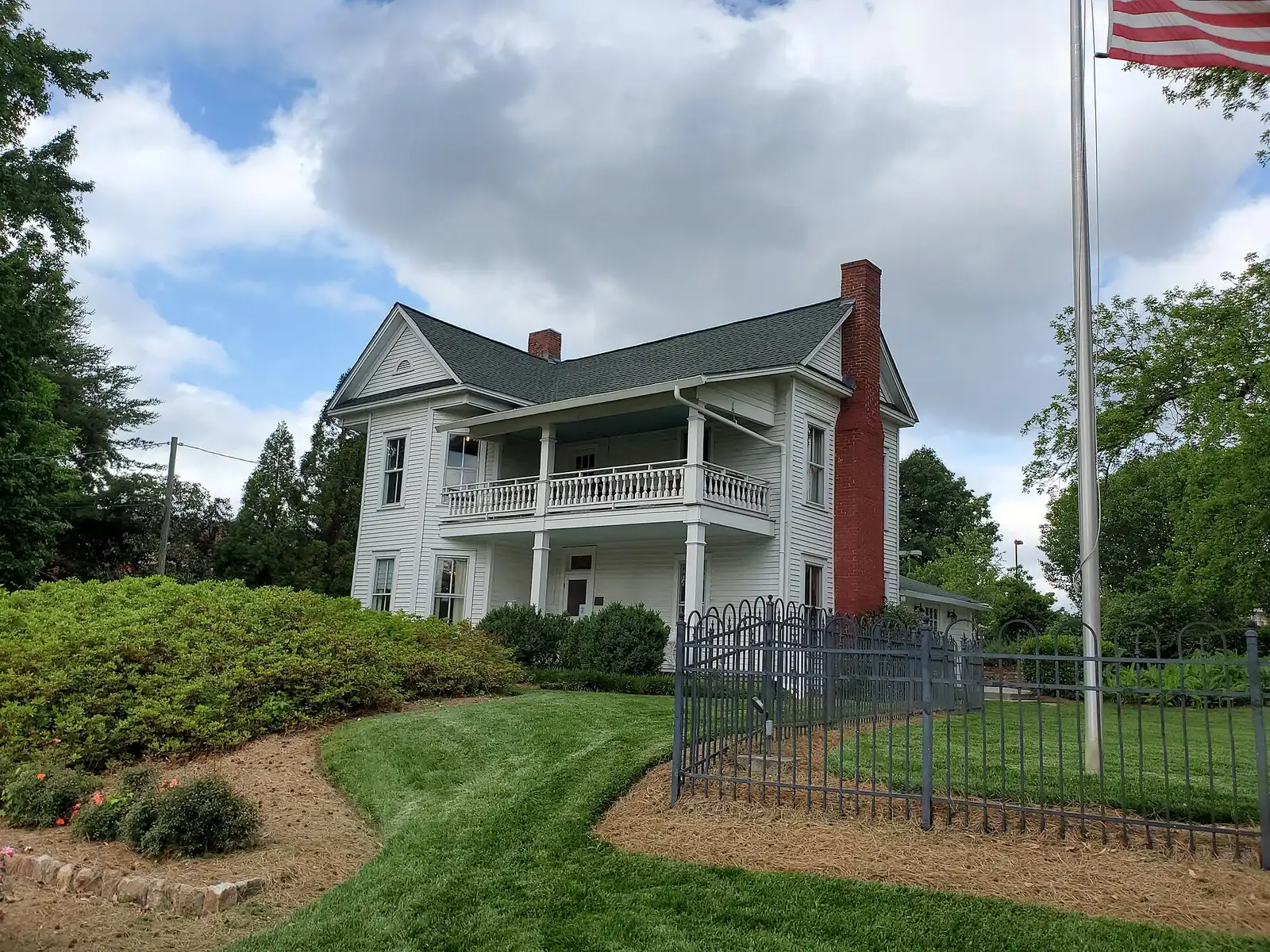
Dunwoody became a city in December 2008. Its two National Register sites are the Cheek-Spruill House (2000) and Donaldson-Bannister House and Cemetery (2009).
Last checked Oct. 5, 2026. Facts on this page come from the National Park Service’s National Register of Historic Places data, the Dunwoody Preservation Trust and Discover Dunwoody, the city’s convention and visitors bureau.
Dunwoody is one of Georgia’s younger cities but an old community. It was incorporated in December 2008 after a community-led movement, according to Discover Dunwoody, and its roots as a farming crossroads go back to the 1800s.
Who to call
- Dunwoody Preservation Trust (Cheek-Spruill House, Donaldson-Bannister Farm, tours): Executive Director Kristin Simons, 770-668-0401, info@dunwoodypt.org
- School field trips to the farm: meredith@dunwoodypt.org
- DeKalb County history: the DeKalb History Center
- Official pages: the Trust’s historic properties and the city’s Donaldson-Bannister Farm page
How Dunwoody began
- Before 1821: the area near the Chattahoochee River was Cherokee land, Discover Dunwoody says. The Dunwoody Preservation Trust notes the land lots were awarded in Georgia’s 1821 land lottery, which drew settlers such as Stephen Martin from Laurens County, South Carolina.
- The name: Charles Archibald Alexander Dunwoody (1828-1905) was the son of John Dunwoody (also spelled Dunwody), a founder of the Roswell Manufacturing Company mills. After the Civil War he built a home near today’s Chamblee Dunwoody Road and Spalding Drive.
- The railroad: the Roswell Railroad, built between Roswell and Chamblee with a stop in Dunwoody, carried produce from Dunwoody and cloth from the Roswell mills. Dunwoody grew into a crossroads community at Chamblee Dunwoody, Mount Vernon and Nandina roads and kept growing after the railroad shut down in 1921, according to Discover Dunwoody.
- 2008: Dunwoody became a city. Donaldson-Bannister Farm, then county land, became part of the new city’s parks, the Preservation Trust says.
National Register of Historic Places
The National Park Service’s list of National Register properties, updated May 22, 2026, includes two in Dunwoody:
| Property | Address | Listed |
|---|---|---|
| Cheek-Spruill House | 5455 Chamblee Dunwoody Road | June 9, 2000 |
| Donaldson-Bannister House and Cemetery | 4831 Chamblee Dunwoody Road | Aug. 9, 2009 |
The Cheek-Spruill House, “the Dunwoody Farmhouse”
Joberry Cheek built the house in 1906 as a one-story home for his son, Bunyan Cheek, on 2.5 acres with a pasture, cornfield, barn, smokehouse and chicken house. A second story was added later. Carey Spruill and his wife bought it in 1945. After Mrs. Spruill died in 1994, residents led by Joyce Amacher and Lynne Byrd raised more than $200,000 to “Save the Farmhouse,” and the effort founded the Dunwoody Preservation Trust, according to the Trust’s history of the house. The smokehouse and chicken house were moved and saved.
The house, at Mount Vernon and Chamblee Dunwoody roads, appears on the city seal. It is open to the public by appointment, and its History Room is open during normal business hours, the Trust says.
Donaldson-Bannister Farm
William James Donaldson, a Confederate veteran, built a Plantation Plain-style farmhouse here after the Civil War; the Trust dates it to about 1870. His widow, Millie Adams Donaldson, ran the farm for 30 years after his death in 1900. In 1934 the land was sold at auction, and Lois Pattillo, later Lois Bannister, had Atlanta architect Francis Palmer Smith remodel the house in the Colonial Revival style. DeKalb County bought it in 2005; after years of neglect, the Preservation Trust restored it and reopened it on May 1, 2018, according to the Trust’s history of the farm.
Today the farm, at 4831 Chamblee Dunwoody Road, is a city park with the family cemetery and a self-guided tour. It hosts Light Up Dunwoody each November and school field trips on Wednesdays and Fridays during the school year.
Historic cemeteries
- Stephen Martin Cemetery, 244 Perimeter Center Parkway, reached by a marked gravel drive off Perimeter Center Parkway just south of Hammond Drive. It holds 42 known burials, the Trust says, including Stephen Martin, who came in the 1821 land lottery, and his two wives.
- New Hope Cemetery, 5695 Chamblee Dunwoody Road, behind the KinderCare Learning Center. More than 350 people from Dunwoody’s founding families are buried in what remains of New Hope Presbyterian Church, founded in 1885. The Trust describes it as a private cemetery.
- Donaldson-Bannister family cemetery, on the farm grounds.
The Woodall Family Cemetery off Happy Hollow Road is on private property and hard to reach, the Trust says.
Other landmarks
- Dunwoody United Methodist Chapel, 1548 Mount Vernon Road. The congregation began in 1899; the brick chapel was begun in 1935, with Stone Mountain granite laid by Will Donaldson, son of W.J. Donaldson, the Trust says.
- Spruill Gallery, in the Stephen B. Spruill House, 4681 Ashford Dunwoody Road, listed by the DeKalb History Center among the county’s historic sites.
- Ebenezer Primitive Baptist Church and Cemetery, 7325 Roberts Drive, just over the line in Sandy Springs. The congregation dates to 1829, and many of Dunwoody’s early families are buried there.
What this means for you
- To see inside the Farmhouse, call the Preservation Trust ahead.
- Donaldson-Bannister Farm’s grounds are a city park; walk the self-guided tour.
- Researching family history? Start with the Trust’s cemetery pages.
Related: Dunwoody parks and trails, Christmas tree lighting and Fourth of July parade.
Frequently asked questions
When did Dunwoody become a city?
Dunwoody was incorporated as a city in December 2008, after a community-led movement, according to Discover Dunwoody, the city’s convention and visitors bureau.
Who is Dunwoody named after?
Charles Archibald Alexander Dunwoody (1828-1905), son of John Dunwoody, one of the founders of the Roswell Manufacturing Company mills. After the Civil War he built a home near today’s Chamblee Dunwoody Road and Spalding Drive, Discover Dunwoody says.
What historic sites in Dunwoody are on the National Register of Historic Places?
Two, according to the National Park Service: the Cheek-Spruill House, 5455 Chamblee Dunwoody Road, listed June 9, 2000, and the Donaldson-Bannister House and Cemetery, 4831 Chamblee Dunwoody Road, listed Aug. 9, 2009.
Can you visit the Dunwoody Farmhouse?
The Cheek-Spruill House is open to the public by appointment, and its History Room is open during normal business hours, according to the Dunwoody Preservation Trust, which owns it.
Have your say