Dunwoody voters decide Nov. 3 whether to renew DeKalb's 1-cent school sales tax for five more years. It would raise up to $946.8 million for DeKalb schools.
Dunwoody voters will decide on Nov. 3 whether DeKalb County keeps its 1-cent sales tax for school buildings for another five years. Early voting ends Friday.
The question is E-SPLOST VII, the seventh round of the Education Special Purpose Local Option Sales Tax. It is on every DeKalb ballot under “Special Election.” If voters approve it, the tax would run from July 1, 2027, to June 30, 2032. It would raise up to $946,773,776 for the DeKalb County School District, which runs all of Dunwoody’s public schools.
The figures come from the district’s E-SPLOST page and the ballot question it published there.
It is a renewal, not a new tax
The current tax, E-SPLOST VI, ends June 30, 2027, or sooner if it hits its legal cap. The district said E-SPLOST VII “is not an additional one-cent sales tax and would not increase the current sales tax rate,” in its list of 26 questions and answers.
If voters say no, the 1 cent stops when E-SPLOST VI runs out. The district said it would then “need to identify other legally available funding sources” for building work.
DeKalb voters have approved all six earlier E-SPLOST programs. The last one passed with 81% of the vote in November 2021, according to the district.
What the ballot question says
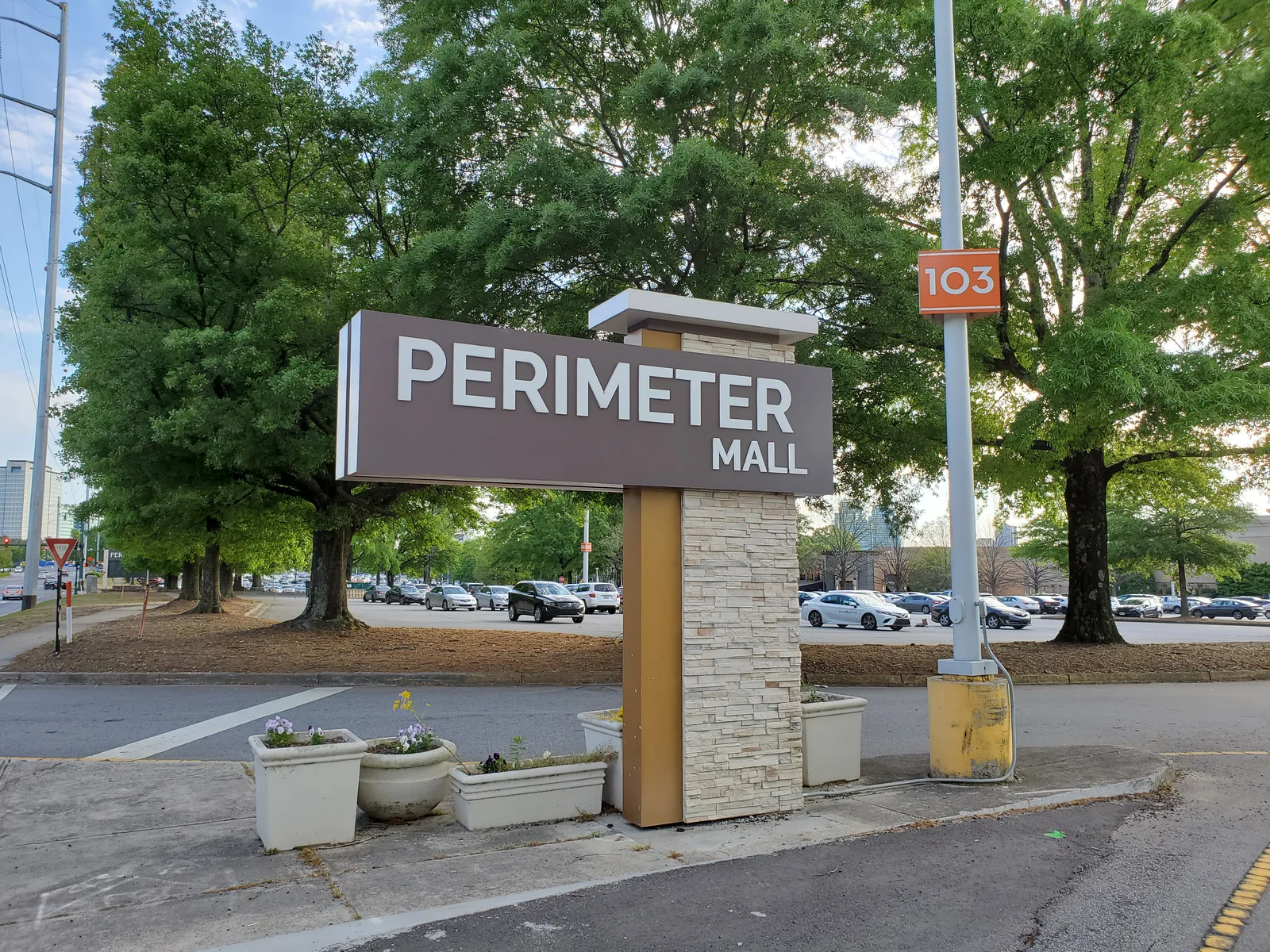
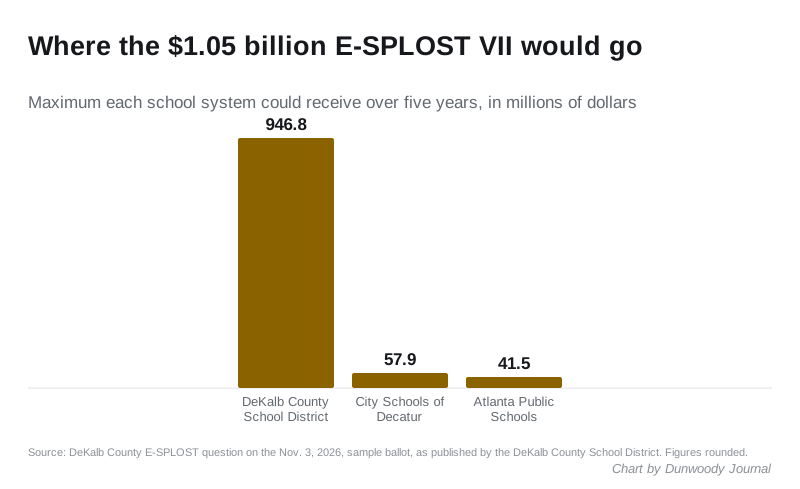
The tax is collected on purchases across DeKalb County, including at Perimeter Mall. Three school systems share it. The ballot sets a combined ceiling of $1,046,154,324:
| School system | Most it could receive |
|---|---|
| DeKalb County School District | $946,773,776 |
| City Schools of Decatur | $57,876,355 |
| Atlanta Public Schools | $41,504,193 |
The district said the split follows an agreement among the three systems based on enrollment.
For DeKalb schools, the ballot lists five kinds of spending:
- adding to, renovating, replacing and equipping existing schools, support buildings, athletic fields and physical education facilities
- buying land for and building new and replacement schools, and additions to existing ones
- capital improvements at existing and new schools, buildings and facilities
- technology: hardware, software and related infrastructure
- school buses, support vehicles and other capital equipment
The money cannot pay teacher salaries or benefits, the district said. Property taxes pay for day-to-day school operations.
A yes vote also approves up to $500 million in bonds
A yes vote does a second thing. It authorizes the DeKalb County Board of Education to borrow up to $500 million through general obligation bonds. That would let the district start projects without waiting for the sales tax money, which would start coming in July 2027.
The board would have to vote again before it issued any bonds, the district said.
No project list yet
The ballot approves categories of spending, not named projects. The district’s E-SPLOST page says the Board of Education “is currently considering E-SPLOST projects.” It has not published a school-by-school list for Dunwoody High, Peachtree Middle or Dunwoody’s six elementary schools.
The district’s annual E-SPLOST audits are linked from the same page. The most recent covers fiscal 2025 and was done by the Georgia Department of Audits and Accounts.
What it means for you
- Early voting ends Friday, Oct. 30. Sites are open 7 a.m. to 7 p.m. weekdays, including the Dunwoody Library at 5339 Chamblee Dunwoody Road. Any DeKalb voter can use any site.
- Election Day is Tuesday, Nov. 3. Polls are open 7 a.m. to 7 p.m. at your assigned polling place. Bring a photo ID.
- See your own ballot on the state’s My Voter Page. The E-SPLOST question is on page 4 of DeKalb’s ballot, the district said.
- Your sales tax rate does not change either way until July 1, 2027.
Polling places, early voting sites and ID rules are on our Dunwoody voting guide. For the schools themselves, see our guide to Dunwoody’s public schools. The city’s own budget, which is separate from the school district’s, is covered in our story on Dunwoody’s proposed 2027 budget.
Have your say